Understanding Our Glazing Options
LWS&I Windows and Doors
Choosing the right glazing for your windows and doors significantly impacts your home's warmth, quietness, and energy bills. We offer a range of modern solutions tailored to your specific needs.
Core Insulation Options
These options form the foundation of modern window performance, utilizing multiple panes and coatings to reduce heat transfer.
Double Glazing (Expirering Standard):
- Consists of two panes of glass with an insulating gap filled with inert gas (typically Argon).
- Benefit: A cost-effective balance of thermal insulation (U-values around 1.2 W/m²K) and noise reduction, suitable for most homes.
Triple Glazing (Optimal choice):
- Features three panes of glass with two gas-filled gaps, offering superior insulation.
- Benefit: Achieves the lowest possible U-values (as low as 0.71 W/m²K), ideal for "passive" or eco-conscious homes in colder climates that want maximum warmth and quiet.
Quadruple Glazing (Maximum Efficiency):
- Quadruple glazing is not necessary for every home and is most effective in specific scenarios.
- Benefit: Achieves the lowest possible U-values (low as 0.3 W/m²K) for the glazing unit and around 0.58 W/m²K for the whole window system, making it an optimal choice for zero-energy or zero-emission buildings.
Specialized Functional Glass
Enhance your windows and doors further with glass designed for specific lifestyle requirements.
Low-E Glass:
- An invisible metallic layer applied to the glass, fitted as standard on all our units.
- Benefit: Reflects internal heat back into your home during winter, preventing heat loss, while still allowing natural light in.
Acoustic Control Glass:
- Uses laminated glass to absorb sound waves and significantly reduce outside noise.
- Best For: Homes near busy roads, airports, or commercial areas.
Solar Control Glass:
- Designed with a special coating to minimise solar heat gain.
- Best For: Large, south-facing windows or sunrooms prone to overheating in direct sunlight.
Safety & Security Glass:
- Toughened (Tempered) Glass: Heat-treated glass that is much stronger than standard glass and shatters into small, blunt pieces if broken, preventing injury. Required by building regulations in doors and near-floor windows.
Laminated Glass:
- Two panes of glass bonded with a plastic interlayer (PVB). If the glass breaks, the interlayer holds the shards in place, deterring burglars and enhancing safety.
Privacy (Obscure) Glass:
- Available in various patterns and finishes (frosted, textured).
- Best For: Bathrooms, front doors, or ground-floor rooms where natural light is desired but privacy is essential.
Double Glazing
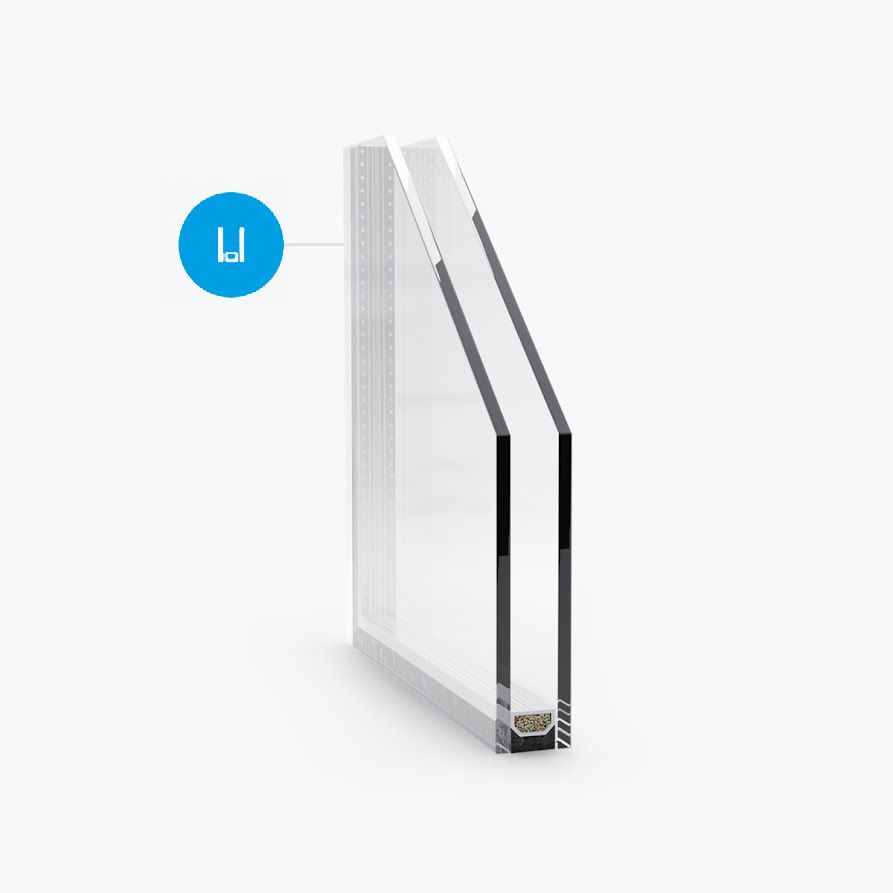
Single-chamber construction of insulated glass package with thermal insulation and thermal transmittance in a range of:
1,0 ≤ Ug ≤ 2,9 W/(m2 * K)
Triple Glazing
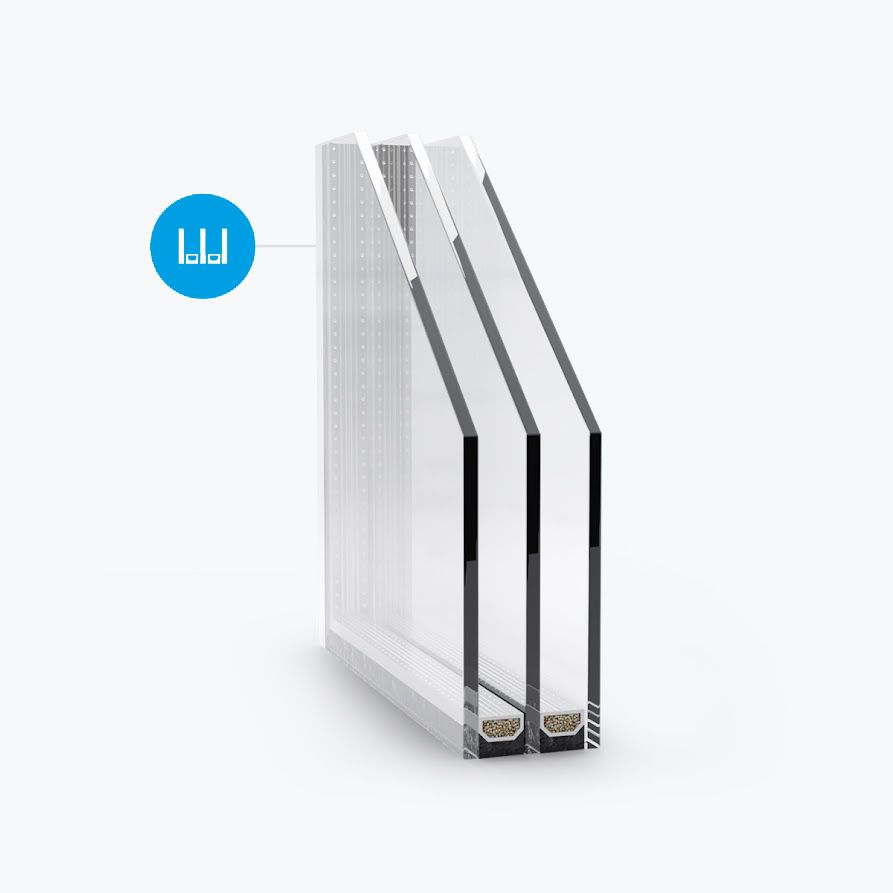
Dual-chamber construction of insulated glass package with thermal insulation and thermal transmittance in a range of:
0,4 ≤ Ug ≤ 0,9 W/(m2 * K)
Quadruple Glazing
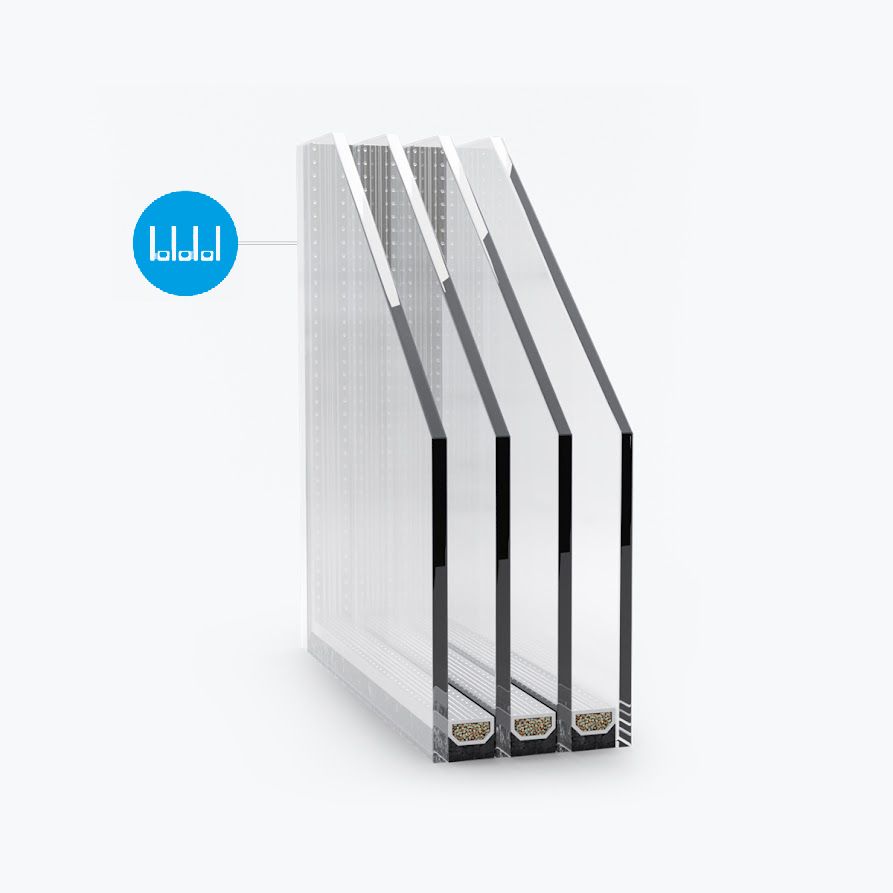
Triple-chamber construction of insulated glass package with thermal insulation and thermal transmittance in a range of:
Ug = 0.7-0.3 W/(m2 * K)
Decorative Glass
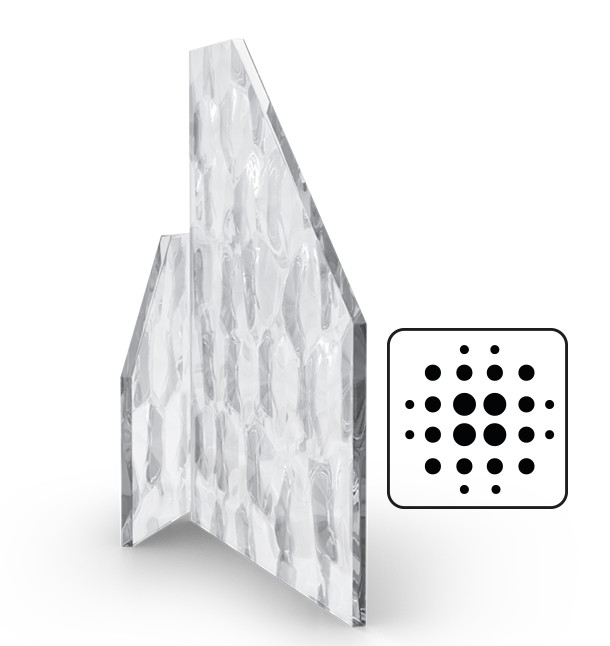
sandblasted glass available from the thickness of 6mm
colored glass ESG available in a wide range of RAL
Safety Glass
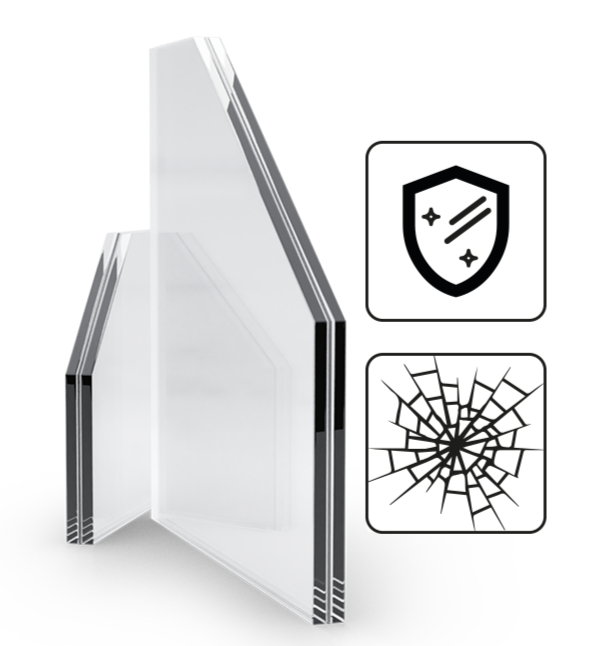
available thicknesses of ESG (tempered glass): 4, 6, 8, 10 mm
available thickness of the VSG (laminated glass): in various configurations
Soundproof Glass
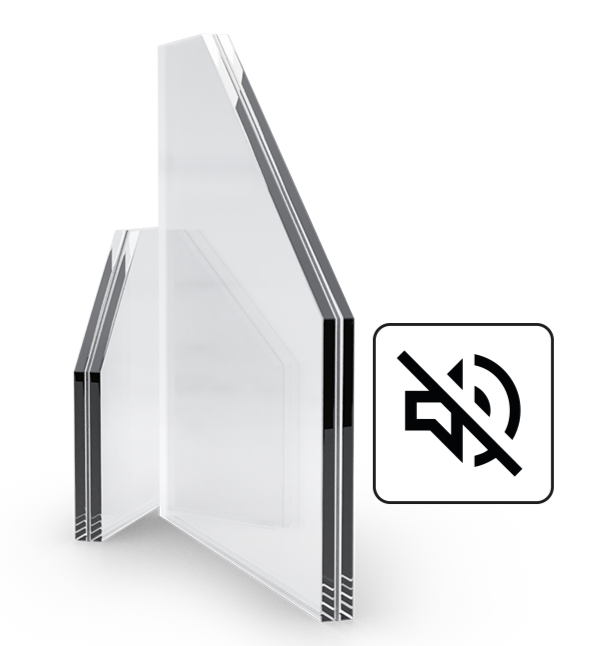
laminate made of float / thermofloat glass and acoustic foils
acoustic insulation of sound-absorbing glass units up to the value of Rw = 51 dB
Solar Control Glass
the possibility of limiting the amount of heat entering the interior
the possibility of limiting the amount of light entering the interior
Fire Protection Glass
high mechanical resistance through the use of toughened glass
pendulum impact resistance (according to EN 12600) 1 / B / 1
Bird-Safe Glass
glass reflecting UV radiation, invisible to humans
active coating on the 1st external pane
Guardian ViewBoost™ Glass
significant reduction of internal and external reflections
for double- and triple-glazed units
Guardian ClimaGuard® Dry Glass
glass limiting water vapour condensation
designed for triple-glazed units
Regulated Transparency Glass
Opti White Pilkington 4mm panes
active coating on the 1st external pane
Heating glass/glazing
heating glass EGLAS is an active glass whose task is to heat the interior
it will allow you to eliminate condensation, steam or snow

Enameled glass/glazing

the maximum thickness of the glass is from 4 to 19 mm
the maximum weight of a single sheet can not exceed 400 kg.
Warm glazing units consisting of up to four panes.
As standard, we fill the glazing units with argon.
On the inside, the glass is covered with a heat-insulating coating.
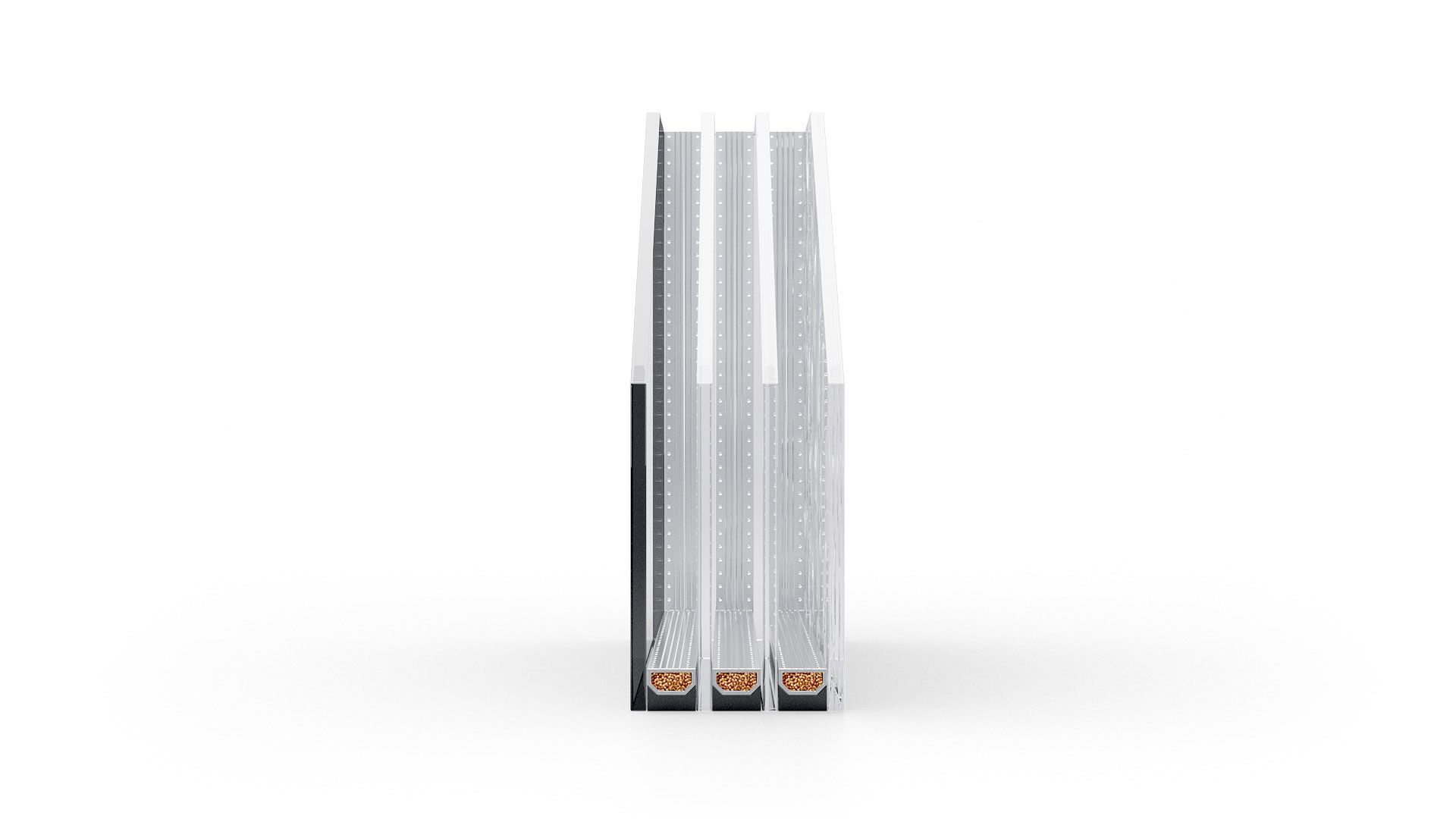
The warmest panes on the market
Modern technologies used to create a window that allows for thermal parameters similar to well-insulated walls. As a result, glazing ceases to be a weak point of the building in terms of energy conservation, allowing for bigger windows without burdening the household budget. Even a passive house can now be a home full of natural light.
- A wealth of aesthetic options
In addition to fully transparent panes, the most commonly used solution, you can choose from a wide range of decorative glass. Sandblasted glass in various degrees of transparency and patterns, frosted glass, mass-coloured glass, and white and brown ornamental glass of varying thicknesses are available. Panes alternating between transparency and opaqueness?
- Adequate safety for household members
Safe glazing ensure that even if a window or patio door is damaged, the risk to its users is significantly reduced. There are several effective solutions available to lower the risk of glass breakage and ensure that even if it does break, the consequences of such an event are typically less serious. Tempered panes break into small pieces with blunt edges, and laminated glass tends to stop the created fragments, similar to how car windows do.
- Insulated glass units with additional functionality
Modern glzing are insulated glazing units, i.e., glass packages consisting of at least two glass panes separated by a chamber filled with gas. In addition, special coatings and films can appear on individual glass panes included in insulated glass units or between two composite glass sheets. They improve the thermal or acoustic insulation of the unit, limit the amount of heat penetrating the interior, or offer other advanced functionality useful in atypical conditions.
Glass in modern windows can cover significantly more than 90% of the opening's light. This also applies to sliding systems. Large glazings are popular in internal and external doors. Modern windows not only need to look good, but they should also offer appropriate parameters and ensure safety. These are mainly used as multifunctional insulating glazing units.